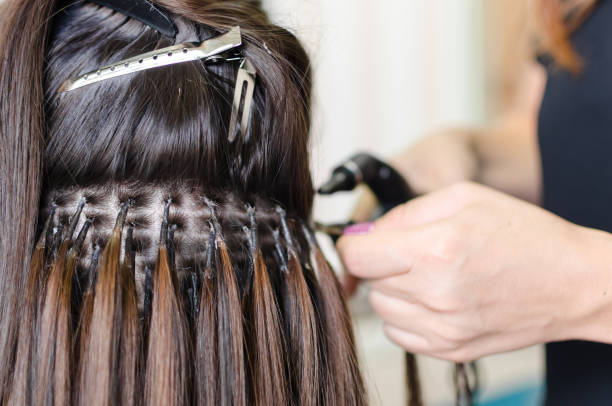
Every week at the salon, the same question comes up in slightly different forms: “Which type of extensions should I get?” There isn’t a universal answer but there is a logical way to narrow it down based on your hair type, lifestyle, and how much maintenance you’re realistically willing to commit to. Here’s the breakdown from a specialist’s perspective.
Tape-In Extensions: Best For Fine to Medium Hair
Tape-in extensions work by sandwiching thin wefts of hair on either side of a small section of your natural hair using medical-grade adhesive. The result is a flat, discreet bond that lies close to the scalp. For women with fine or medium-density hair, tape-ins are often the recommended starting point.
The key advantage is the weight distribution. Because the weft spans about an inch wide, the extension isn’t pulling on a single strand it’s supported across multiple hairs. This dramatically reduces the risk of breakage that can come with point-load methods like K-tip.
Maintenance schedule: every 6–8 weeks. Use sulfate-free products, avoid applying conditioner near the roots, and don’t use oil-based anything near the bonds it breaks down the adhesive. If you’re someone who frequently pulls hair up into ponytails or braids, be mindful of where the bonds sit; sometimes placement needs to be adjusted to keep them hidden.
Beaded (Micro-Link / I-Tip) Extensions: Best for Medium to Thick Hair
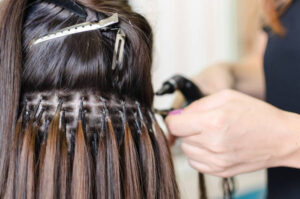
Beaded extensions attach individual strands using small metal rings that are clamped onto a section of natural hair, no heat, no glue. They’re a popular choice for women who want to avoid adhesive entirely. The downside for fine hair is that the rings concentrate load on a smaller section of strands, which can cause slippage or stress if your hair isn’t dense enough to anchor them.
For medium to thick hair, beaded extensions are excellent. They’re repositionable, long-lasting (usually 3–4 months before major maintenance), and the absence of heat or glue means less disruption to your hair structure. The specialist should use rings that are properly sized for your strand diameter. This is one of those things that sounds small but makes a real difference in how the extensions wear.
K-Tip (Keratin-Tip) Extensions: Best for Medium to Thick Hair with Volume Goals
K-tip extensions are individual strands with a keratin bond at the tip, fused to your natural hair using a specialized heating tool. They create a very customizable result since each strand is applied individually, the specialist has total control over placement and density. Want more volume at the crown but not the nape? K-tips allow for that precision.
The trade-off is time. A full K-tip installation typically takes 3–5 hours. The bonds also require careful heat styling to keep direct heat away from the keratin tips, or they can weaken prematurely. For fine hair, visibility of the bonds can be an issue, and the concentration of weight on individual strands makes damage more likely if the install or removal isn’t handled carefully.
Hand-Tied Wefts: The Premium Option for Fine and Thinning Hair in Naples FL
Hand-tied wefts have become the most-requested extension method at many Naples salons, particularly among clients with fine or thinning hair. The weft is sewn onto a row of microbeads rather than attached to individual strands, spreading the weight across a wider anchor point and nearly eliminating scalp tension.
The result looks the most natural of any method; there are no individual bonds to detect, just a flat weft that blends seamlessly when cut and colored to match. The downside is cost and time: hand-tied wefts take longer to install and require a more skilled specialist to do correctly. When looking for best hair extensions in Naples FL for fine hair specifically, hand-tied wefts are consistently the recommendation that hair extension specialists land on.
The Real Decision: It’s Not Just About Hair Type
Hair type is the starting point, but your lifestyle matters too. Do you swim in the Gulf regularly? Salt water and chlorine can affect adhesive bonds faster than expected tape-ins may need more frequent maintenance in that case. Do you work out every day? Excess sweat around the bonds can cause slippage. Do you color your hair regularly? Extensions need to be coordinated with your color schedule, ideally at the same appointment.
The bottom line: the best professional hair extensions in Naples, FL are the ones chosen through an honest consultation that accounts for all of this, not just the method that’s trendy or the one your stylist does most often. Ask the hard questions before you book. Learn more about Why Naples Women Are Ditching Box Dye and Going to a Professional Hair Colorist And How to Find the Best One
Frequently Asked Questions
How do I choose the best hair extensions in Naples, FL for fine hair?
For women with fine or thinning hair, hand-tied wefts are often the top recommendation from hair extension specialists in Naples because they spread weight across a wider anchor point, nearly eliminating scalp tension. Tape-in extensions are also a great starting point for fine hair as they feature flat, discreet bonds that distribute weight evenly across multiple strands to reduce the risk of breakage.
What is the difference between beaded and K-tip professional hair extensions?
Beaded (Micro-Link) extensions use small metal rings to attach individual strands without heat or glue, making them ideal for medium to thick hair. K-tip (Keratin-Tip) extensions involve fusing individual strands to your natural hair using a specialized heating tool, offering a highly customizable result for volume and density, though the installation process typically takes 3–5 hours.
How does my lifestyle in Naples affect my hair extensions?
Your daily activities play a significant role in maintenance; for instance, frequent swimming in the Gulf’s salt water can break down the adhesive in tape-in extensions faster than expected. Additionally, if you exercise daily, sweat around the bonds can cause slippage, so it is essential to have an honest consultation with a specialist to choose a method that fits your activity level.